
Outdoor events can feel simple on the planning board: choose a venue, invite guests, order lunch, and enjoy the day. But once the event moves outside, food planning becomes more sensitive. Heat, sun, wind, insects, limited refrigeration, long walking distances, and unpredictable schedules can turn a basic meal into a logistics challenge.
That is why outdoor event catering needs a different plan than indoor meeting catering. A spring festival, company picnic, volunteer day, church gathering, campus event, outdoor conference, or community program may not have a kitchen, refrigerator, serving counter, or climate-controlled dining area. The food still needs to arrive on time, stay appropriate for the setting, and help guests feel comfortable.
This guide explains how event coordinators can plan outdoor lunches with food safety, timing, beverage needs, packaging, shade, and guest comfort in mind. It also explains why boxed lunches can be a practical option when the event has limited refrigeration or simple outdoor infrastructure.
Why Outdoor Lunch Planning Is Different
Indoor catering usually benefits from predictable conditions. There may be tables, elevators, a lobby, a conference room, air conditioning, nearby restrooms, and staff who can receive the order. Outdoor events are different. The food may need to be delivered to a park, courtyard, festival area, tent, field, amphitheater, or parking-lot activation.
That creates extra questions. Where will the delivery driver park? Who will meet them? How far must food be carried? Is there shade? Is there refrigeration? Will guests eat immediately, or will lunch sit while the program runs long? Is water available? Are trash cans nearby? Are there dietary meals that need to be separated and labeled?
Good planning does not remove every risk, but it reduces avoidable problems. The earlier the food plan is built around the outdoor setting, the smoother the event feels.
Start With the Event Environment
Before choosing a menu, describe the environment. Is the event in direct sun or under a pavilion? Is there a tent? Are there tables? Is power available? Is there potable water? Is there a nearby building? Is there refrigeration or cooler space? Is there a loading zone?
These details affect the menu. A food format that works in a conference room may not work in a park with no shade. A platter may be easy indoors but difficult outdoors if guests are standing, moving between activities, or balancing plates without tables.
A strong catering plan starts with the real conditions, not the ideal conditions.
Temperature Control Comes First
Food safety for outdoor catering begins with temperature control. Perishable foods should not be left in unsafe conditions, especially in hot weather. Outdoor events create added risk because sun, warm air, and delayed service can affect food quickly.
Event coordinators should work with the caterer to understand how food will be transported, when it should be served, how long it can safely remain out, and what the plan is if the schedule changes. If the venue has no refrigeration, the menu and delivery timing become especially important.
Do not guess. Ask the caterer for practical guidance based on the menu, packaging, delivery time, and expected weather. Also review official food safety guidance when planning events in hot conditions.
Build the Lunch Schedule Around Food Safety
The safest outdoor meal is usually one that is eaten soon after delivery. If lunch is scheduled for noon, the delivery should be timed close enough to service that food does not sit unattended for a long period.
Avoid ordering food too early “just to be safe.” Early delivery may protect against traffic, but it can create food holding problems if there is no refrigeration. Instead, build a clear arrival window, identify the on-site contact, and have a backup plan for access issues.
The event agenda should also protect the meal. If a speaker runs long or a ceremony delays lunch, someone should be responsible for deciding whether food needs to be served, moved, shaded, or managed differently.
Why Boxed Lunches Work Well Outdoors
Boxed lunch catering can be especially helpful for outdoor events because each meal is self-contained. Guests do not need to wait in a long buffet line, handle shared serving utensils, or balance multiple loose items while standing.
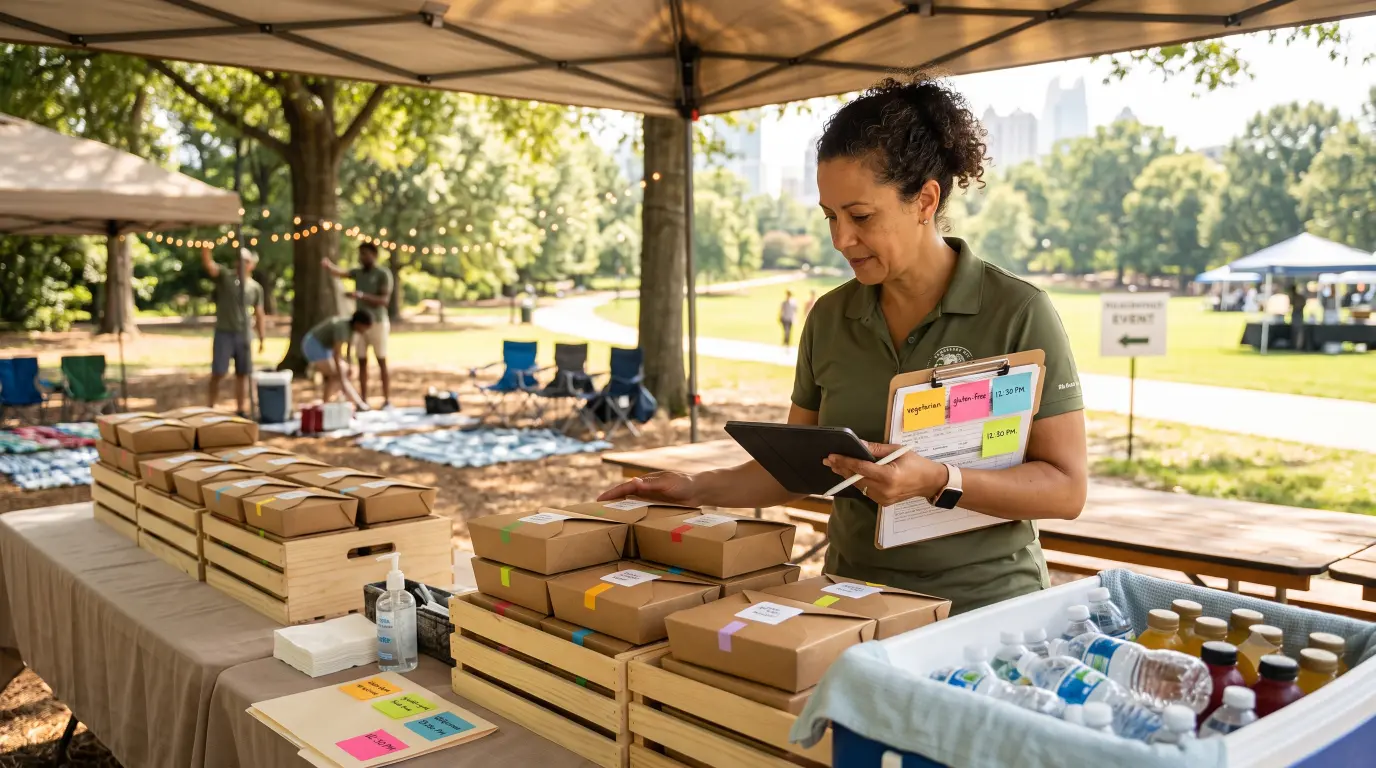
A boxed lunch can also simplify distribution. Meals can be arranged by dietary type, handed out at check-in, placed on tables, or distributed to volunteers in waves. Packaging helps protect the meal from outdoor handling issues and makes cleanup easier.
For events without refrigeration, boxed lunches still require proper timing and handling. But they often reduce the complexity of outdoor food service compared with trays, chafers, or buffet setups.
Choose Foods That Travel and Hold Better
Outdoor menus should be practical. Foods that require delicate plating, extensive setup, precise heating, or messy assembly may not be ideal. Menu items should travel well, be easy to distribute, and fit the expected eating environment.
Sandwiches, wraps, composed salads, sturdy sides, individually packaged desserts, fruit, chips, and bottled or canned beverages can work well depending on the event. The right menu depends on weather, timing, guest needs, and the caterer’s guidance.
Avoid choosing food only because it looks impressive. The best outdoor lunch is the one that arrives cleanly, serves efficiently, and helps guests stay comfortable.
Plan for Hot Weather in Atlanta
Catering in hot weather Atlanta events requires extra attention. Spring and summer events can shift from comfortable to very warm quickly, especially in direct sun or on paved surfaces. Humidity can also affect guest comfort.
Coordinate delivery as close to meal time as practical. Keep food shaded. Avoid leaving meals in vehicles, direct sun, or unattended hot areas. Make sure guests have water and a place to sit or rest if the event is long.
If the forecast looks hotter than expected, revisit the plan. A menu, beverage count, or distribution setup that works at 72 degrees may need adjustment at 90 degrees.
Beverage Planning Is Not Optional
Outdoor event lunch logistics should include a beverage plan from the start. Guests need water, especially when the event includes walking, volunteering, standing, sports, setup work, or time in the sun.
Estimate water separately from lunch. Do not assume one drink per person is enough for a long outdoor event. Consider whether beverages should be distributed with boxed lunches, placed at hydration stations, or handed out throughout the day.
Also think about ice, cups, coolers, shade, recycling, and trash. A beverage plan that looks simple indoors can become complicated outside if no one owns the details.
Shade and Seating Affect the Meal Experience
Food may be safe and fresh, but guests can still have a poor experience if there is nowhere comfortable to eat. Outdoor lunches need shade, seating, and clear distribution points whenever possible.
If tables are limited, choose food that is easy to eat without cutting or balancing several containers. If guests will be standing, avoid messy sauces, oversized portions, or items that require two hands and extra utensils.
Comfort is part of catering. A well-planned lunch helps people stay present, hydrated, and able to return to the event without feeling rushed or overheated.
Confirm Packaging for Outdoor Conditions
Boxed lunch packaging for outdoors should be sturdy, easy to carry, and simple to distribute. Ask whether each meal includes utensils, napkins, condiments, sides, dessert, and labeling. If guests will be walking across a field, courtyard, or parking area, flimsy packaging can create frustration.
Dietary meals should be clearly marked and separated from standard meals. If the caterer can label vegetarian, gluten-free, or other special meals, confirm how those labels will appear and who will manage distribution.
Good packaging reduces confusion, protects the meal, and makes cleanup more manageable.
Manage Dietary Needs Early
Outdoor events can make dietary mistakes harder to fix. If a vegetarian or allergy-sensitive meal is missing, there may not be an easy replacement nearby. Collect dietary needs early and send final counts to the caterer before the order deadline.
Do not overpromise. Confirm what the caterer can accommodate and how meals will be labeled. If the event includes guests with serious allergies, discuss the limitations and procedures clearly with the caterer and your internal team.
The goal is to help every guest feel considered while staying realistic about what can be safely and accurately provided.
Create a Delivery-Day Contact Plan
Outdoor delivery can fail when the driver cannot find the right person or location. Create a delivery-day contact plan with the event coordinator’s phone number, backup contact, venue address, delivery entrance, parking instructions, room or outdoor area name, and exact arrival window.
If the event is in a park or campus, use landmarks. If there are multiple entrances, specify the correct one. If cell service is weak, plan for that too.
Someone should be assigned to meet the delivery, inspect the order, confirm dietary meals, and direct placement. Do not leave this to chance.
Think About Trash and Cleanup
Outdoor meals produce packaging, napkins, bottles, bags, and leftover food. If the event site has limited trash capacity, the catering plan can quickly become a cleanup problem.
Ask the venue or event site what trash and recycling options are available. Decide whether your team, the venue, or the caterer is responsible for cleanup. Bring extra bags if needed. Place bins near eating areas, not far away.
A clean event space improves guest experience and protects the relationship with the venue.
Have a Weather Backup Plan
Outdoor events need a weather plan. Rain, wind, heat, sudden storms, or muddy conditions can affect food service. Even if the event continues, the lunch distribution point may need to move.
Identify a backup location before the event. That may be a pavilion, tent, lobby, covered walkway, classroom, church hall, or indoor room. Make sure the caterer knows where to go if the plan changes.
Weather planning is not pessimism. It is what allows the event to stay calm when conditions shift.
Questions to Ask the Caterer Before an Outdoor Event
Before confirming outdoor event catering, ask these questions:
How should this menu be handled outdoors?
What delivery time do you recommend based on meal service time?
Does the menu require refrigeration, heating, or immediate service?
Can meals be individually packaged?
How are dietary meals labeled?
What is included in each boxed lunch?
Are utensils, napkins, condiments, sides, and desserts included?
Can beverages be included or coordinated separately?
What happens if the delivery location is difficult to access?
Who should the event team call on delivery day?
Outdoor Event Catering Checklist
Use this checklist before placing the order:
Confirm the event location, delivery point, and on-site contact.
Check whether refrigeration, shade, tables, and trash bins are available.
Choose a menu that fits the weather, timing, and guest movement.
Schedule delivery close to meal service time.
Confirm food handling expectations with the caterer.
Collect dietary needs early and confirm labels.
Plan water and beverages separately from food.
Arrange shade and seating where possible.
Confirm packaging, utensils, napkins, and condiments.
Prepare a weather backup location.
Assign someone to receive, inspect, and distribute the order.
Plan trash, recycling, and cleanup.
How Gathering Industries Fits Outdoor Lunch Planning
Gathering Industries offers catered boxed lunches and related catering formats for teams and events in the Atlanta area. Its nonprofit social enterprise model connects practical food service with culinary training, job-readiness support, and second-chance employment pathways.
For outdoor events, boxed lunches can be a useful format to evaluate because they simplify distribution, reduce setup needs, and help coordinators serve guests in spaces that may not have kitchens or refrigeration. Gathering Industries’ mission-led model also gives Atlanta organizations a way to connect lunch purchasing with local community impact.
As with any outdoor event order, coordinators should confirm menu fit, delivery timing, dietary needs, packaging, venue access, weather considerations, and food handling expectations before committing.
Outdoor lunches can be memorable for the right reasons when the catering plan fits the environment. Start with the venue conditions, build the schedule around food safety, choose packaging that works outdoors, plan beverages carefully, and communicate clearly with the caterer.
When there is no refrigeration or limited infrastructure, boxed lunches can make outdoor event catering more manageable. They are easier to distribute, easier to label, easier to clean up, and often better suited to guests who are moving through an event.
For Atlanta event coordinators looking for practical boxed lunch catering with local mission impact, Gathering Industries is a strong option to evaluate.
FAQ
What should I consider when planning outdoor event catering?
Consider temperature control, delivery timing, shade, refrigeration availability, beverage needs, guest comfort, packaging, dietary labels, trash, cleanup, and weather backup plans. Outdoor catering should be planned around the real conditions of the event site.
Are boxed lunches good for outdoor events?
Boxed lunches can work well for outdoor events because they are individually packaged, easy to distribute, simpler to label by dietary need, and easier to clean up than buffet-style service. They still need proper timing and handling.
How do I keep food safe for outdoor catering?
Work with the caterer to choose an appropriate menu, schedule delivery close to service time, keep food shaded, avoid long holding times without temperature control, and follow official food safety guidance for outdoor events.
What beverages should I provide for an outdoor lunch?
Water should be planned separately and generously, especially in warm weather or active events. Depending on the event, you may also include canned or bottled drinks, hydration stations, ice, cups, and recycling or trash support.
Why consider Gathering Industries for outdoor event boxed lunches in Atlanta?
Gathering Industries offers catered boxed lunches and related event-friendly formats while supporting culinary training and second-chance employment pathways in Atlanta. Event coordinators should confirm delivery, menu, packaging, timing, and venue needs before ordering.
RELATED LINK: